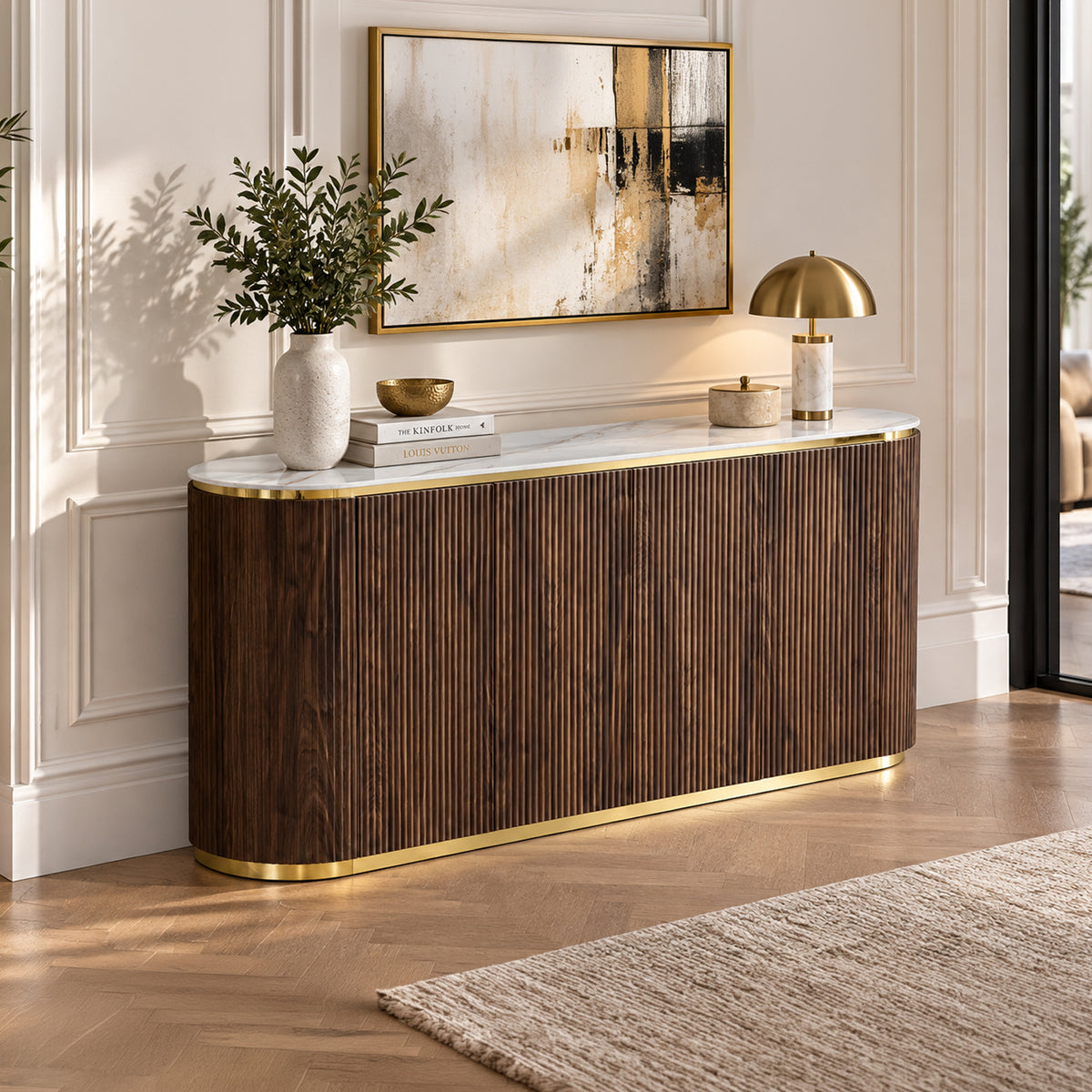
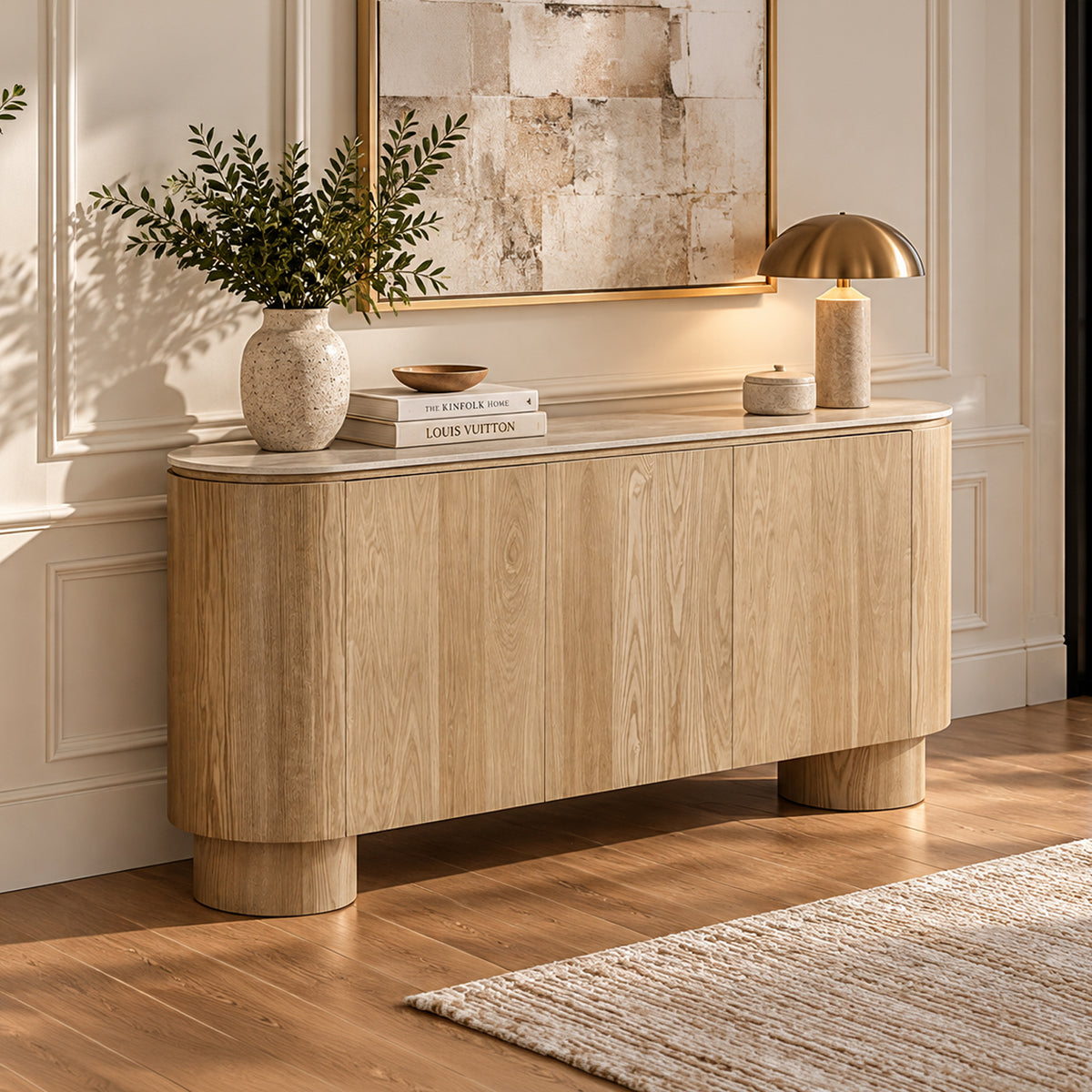
Buffets and Sideboards in Hoppers Crossing, Thomastown and Dandenong
Furn House offers a wide range of sideboard designs that balance storage, style and everyday function. Each buffet table helps you organise, display and store items in a clean and simple way. You get strong materials, neat lines and finishes that work well in Australian homes. Whether you want a bold feature piece or a compact buffet cabinet for daily use, there is a sideboard cabinet that suits your style and layout.
Our range focuses on pieces that feel natural in real homes. You can browse online or visit our showrooms in Hoppers Crossing, Thomastown, or Dandenong to see the full collection.
How Sideboards Fit Into Different Rooms
Sideboards suit many areas because they offer storage without crowding your space. They help anchor empty walls and offer an easy place for décor.
Dining Rooms
A sideboard works well with dining room furniture. It stores plates, platters and table linen. It also gives you a surface for dishes during gatherings. Many customers pair their sideboard with dining sets to create a complete layout. This keeps the room ready for daily use and special events.
Living Rooms
A sideboard cabinet fits naturally into a living room. Cords, remotes and books can all be stored behind closed doors. The top surface suits lamps, framed photos or plants. Many people hang wall mirrors above their buffet to brighten the room. The unit sits well on long walls and helps define the seating space.
Hallways and Entryways
A slim buffet table suits long hallways or entry areas. It gives you a spot for keys or small items. It fills empty walls without tightening the walkway. When paired with console tables, it creates a smooth flow from the front door into your living space.
Bedrooms
A sideboard also works well in bedrooms. It stores clothing, linen or seasonal items. It pairs well with bed frames, tallboys and other bedroom pieces. The top surface holds plants, décor or personal items. This helps the room stay calm and tidy.
Materials and Features That Shape Each Sideboard
Sideboards come in many materials and layouts. Each choice changes the feel of your room.
Timber for Natural Warmth
Timber brings a grounded and textured look. Light oak suits coastal rooms. Darker stains fit rustic or traditional homes. Solid timber ages well and adds character over time. Timber works smoothly with many types of dining room furniture.
Engineered Wood and MDF for Clean Surfaces
Engineered wood and MDF offer smooth finishes and consistent strength. These materials suit modern homes because they feel tidy and simple. They are easy to clean and stay stable over time.
Metal for a Modern Profile
Metal legs and handles bring contrast. They sharpen the look of the sideboard. They fit well in industrial and contemporary rooms.
Glass for a Light and Refined Look
Glass inserts or doors soften the look of the piece. They suit dining and living rooms that want a lighter feel. They let you display décor or tableware while keeping dust away.
Practical Features
- Drawers keep small items sorted.
- Shelves offer space for bowls, serving ware or baskets. Many shelves adjust to suit different items.
- Cabinet doors hide clutter and create a clean backdrop.
- Soft-close hinges give quiet and smooth movement.
Care and Maintenance
- Timber should be dusted often and cleaned with a mild product.
- Engineered surfaces can be wiped with a damp cloth.
- Glass can be cleaned with a standard cleaner.
- Metal needs a quick dry wipe.
- Routine care keeps your sideboard in strong condition.
Comparing Sideboard Styles
Each style suits different rooms and decorating preferences.
Modern
Modern sideboards use minimal hardware and smooth lines. They fit apartments, new builds and open-plan living rooms. They pair well with console tables and simple décor.
Traditional
Traditional sideboards use deeper colours, detailed handles and rich timber. They add warmth and character. They look strong in larger rooms, especially when paired with wall mirrors or artwork.
Coastal
Coastal designs use pale timber and light finishes. They suit bright homes that want a calm and relaxed feel. They look natural beside soft fabrics and neutral colours.
Industrial
Industrial units blend timber and metal. They bring contrast and structure. They suit open living rooms that want a bold focal point.
Pros and Cons of Each Style
- Modern: Tidy and flexible. May feel plain if you like texture.
- Traditional: Warm and classic. Can feel heavy in smaller rooms.
- Coastal: Light and airy. Needs gentle cleaning to stay fresh.
- Industrial: Strong and bold. Suits rooms with enough space to show contrast.
Buying Guidance for the Right Sideboard
Choosing the right sideboard is easier when you know what you want it to do. A few simple steps help you make a confident choice.
Plan Your Storage
Think about what you will store. Deep cabinets suit tableware. Drawers suit small tools or accessories. Mixed layouts give you both.
Measure Your Space
Measure the wall and leave space to walk around the unit. Look at the height of nearby pieces. A balanced height line helps the room feel smooth.
Match Your Style
Choose a finish that suits your existing pieces. Timber feels warm. Painted or laminated surfaces feel modern. Metal feels contemporary. Glass feels refined.
Set a Budget
Sideboards come in many price points. Choose a piece that offers strength, style and long-term value. Furn House stocks options for a wide range of homes.
Styling Tips
Place a lamp on the top surface. Add plants or framed photos for softness. Hang wall mirrors above the sideboard to brighten the space. Keep the top neat so the shape of the unit stands out.